
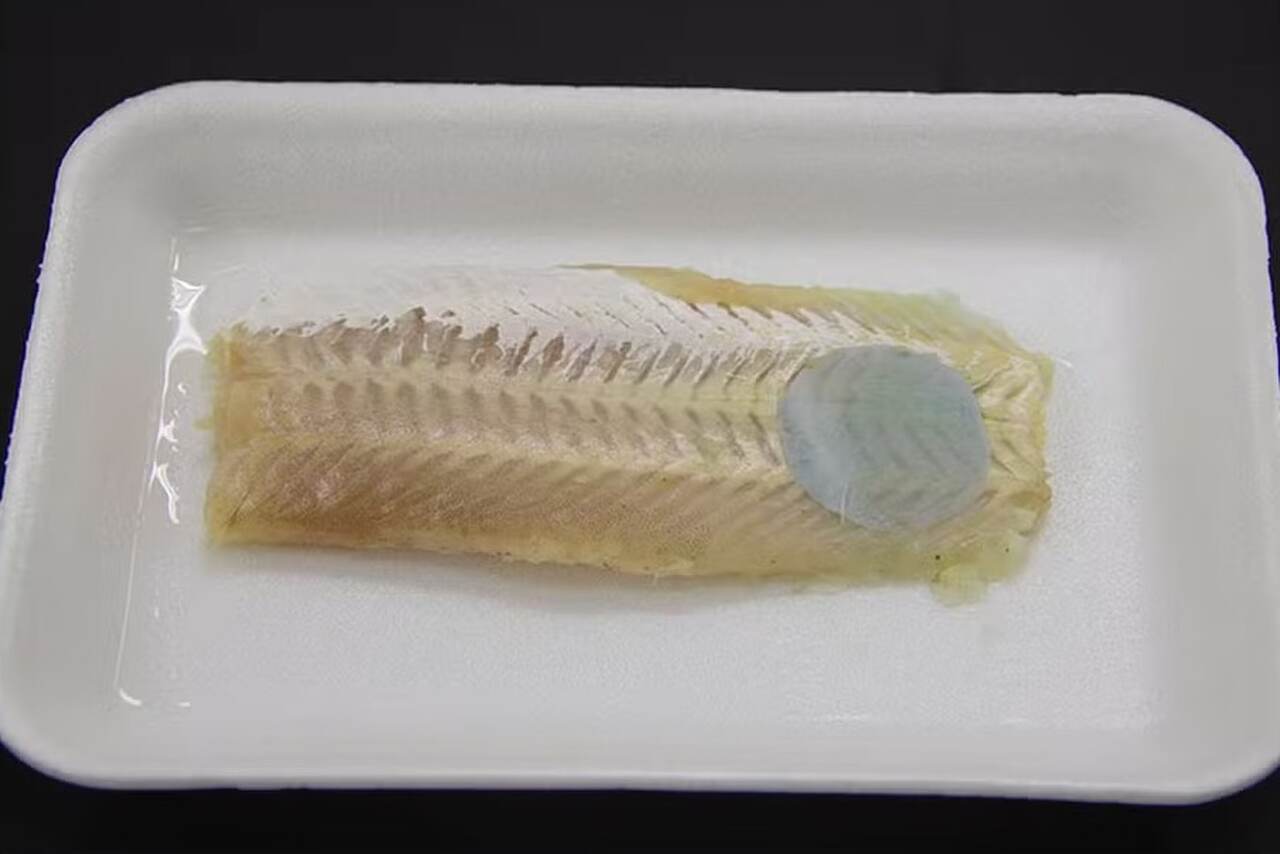
Brazilian researchers have developed a “magic packaging” that changes color to indicate when the food inside has gone bad.
The innovation was created by scientists from the Brazilian Agricultural Research Corporation (Embrapa), in partnership with the University of Illinois in the United States.
This technology works thanks to anthocyanins — natural pigments that react and change color depending on the acidity of the environment. They are found in plants, fruits, and brightly colored vegetables such as red cabbage, which was the source of anthocyanins used in the study.
Researchers used these pigments to create smart nanofiber meshes that, in addition to monitoring acidity, can also detect other released compounds and the growth of bacteria.
This innovation is especially useful for fish and seafood. When the food is spoiled, the smart mesh changes color, letting the consumer know the product is no longer safe to eat.
For the study, they analyzed the interaction between the mesh and a deteriorating hake fillet. After 72 hours of lab observation, the packaging changed color to a bluish tone, indicating the fish had spoiled.
So when will this innovation reach consumers? There’s no release date yet. Although the hake tests showed promising results, Embrapa researchers emphasized that further studies are needed to evaluate the mesh’s performance with other types of fish and seafood.
Photo and video: Embrapa. This content was created with the help of AI and reviewed by the editorial team.
